
The Core Difference Between the Two Trains
Both the Bernina Red Train and the Bernina Express follow the same track, the UNESCO-listed Rhaetian Railway route between Chur or St. Moritz and Tirano in Italy. The scenery is identical. What changes is the experience on board and how you book your ticket.
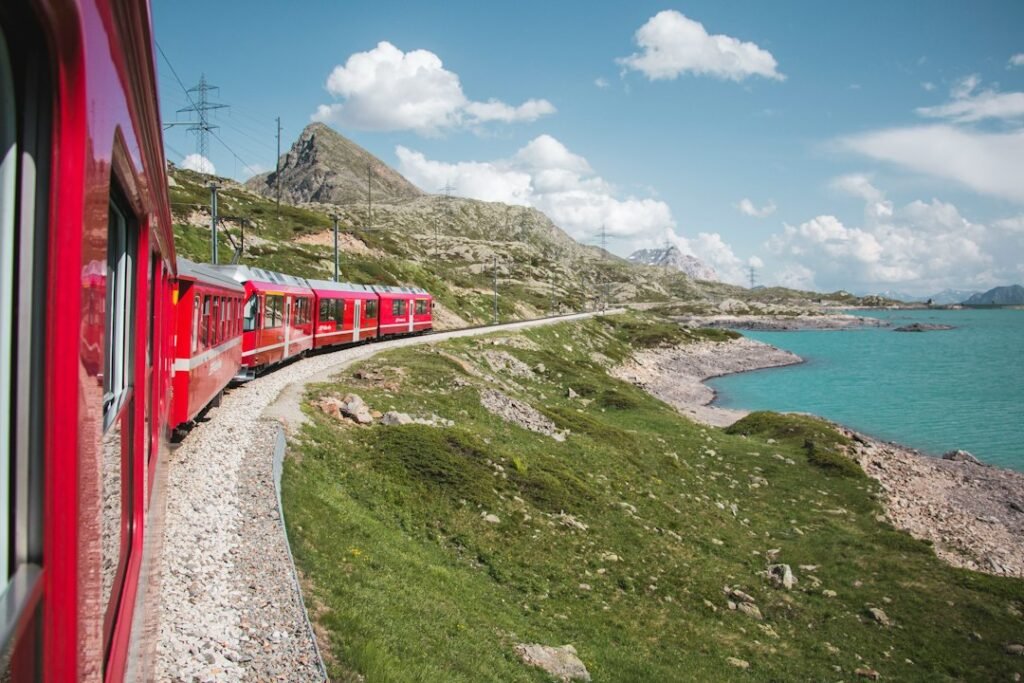
The Bernina Red Train refers to the regular scheduled service operated by Rhaetian Railway (RhB). These are the classic red trains that locals and budget-conscious travelers use daily. You buy a standard rail ticket, no reservation fee required, and you board without fuss. Seats are comfortable, the windows are large, and on a clear day the views over the Morteratsch Glacier and the Brusio spiral viaduct are every bit as spectacular as on the premium service. If you hold a Swiss Travel Pass or Eurail Pass, this train is often fully covered.
The Bernina Express, on the other hand, is a curated panoramic service that runs on the same tracks but uses purpose-built panoramic coaches with curved, extra-large windows that extend into the roof. Seats must be reserved in advance, even with a rail pass, and a reservation surcharge applies. The train runs fewer times per day than the regular service, and it fills up fast in summer. A multilingual audio guide plays descriptions of the landmarks as you pass them, which many first-time visitors find helpful.
For a practical day trip from the Italian side, the Bernina Red Train day trip from Milan is one of the most popular ways to experience this route without overnight stays or complex logistics.
Which Train Is Right for Your Trip
The honest answer depends on three things: your budget, how you plan to travel, and how much you care about panoramic glass versus a regular window.
If you are traveling independently with a rail pass and want flexibility, the regular Bernina Red Train is the smarter pick. You can jump on an earlier or later departure if your morning runs late. You can sit on either side of the train to chase the best light, and you are not locked into a fixed seat reservation. The route itself does the heavy lifting. No panoramic ceiling changes the fact that you are crossing a 2,253-meter mountain pass through some of the most dramatic alpine terrain in Europe.
If you are visiting Switzerland for the first time and want a polished, guided experience with the best possible sightlines, the Bernina Express is worth the extra cost. Book seats on the right side of the train when traveling from St. Moritz to Tirano for the glacier views, and on the left side for the return journey. Reserve at least six to eight weeks ahead in July and August.
For travelers who want a more exclusive experience, a Bernina Train private tour from Milan or St. Moritz removes all the guesswork and pairs the journey with expert guidance along the way.
One practical tip that many guides skip: the section between Ospizio Bernina and Poschiavo is the most dramatic stretch of the entire route. Whatever train you are on, make sure you are awake, off your phone, and looking out the window for that 40-minute window. That alone justifies the whole trip.
For those who want to combine this journey with other iconic Swiss rail routes, the Swiss Alps train tour from Zurich with the Glacier Express pairs beautifully with a Bernina crossing as a multi-day itinerary through the heart of the Alps.