
Yes, the Bernina Express Operates Year-Round
The short answer is yes. The Bernina Express runs every single month of the year, making it one of the few high-altitude scenic rail journeys in Europe that does not shut down for winter. The route connects Chur or St. Moritz in Switzerland with Tirano in northern Italy, crossing the UNESCO World Heritage Rhaetian Railway line at elevations above 2,000 metres. That said, the timetable does shift depending on the season.
During summer, typically May through October, the train runs with the most frequency. You can expect multiple daily departures, and the panoramic carriages with their oversized windows are in high demand. Booking seats weeks in advance is genuinely necessary during peak summer months, especially July and August when the alpine meadows are in full bloom and the views toward Lago Bianco are at their most dramatic.
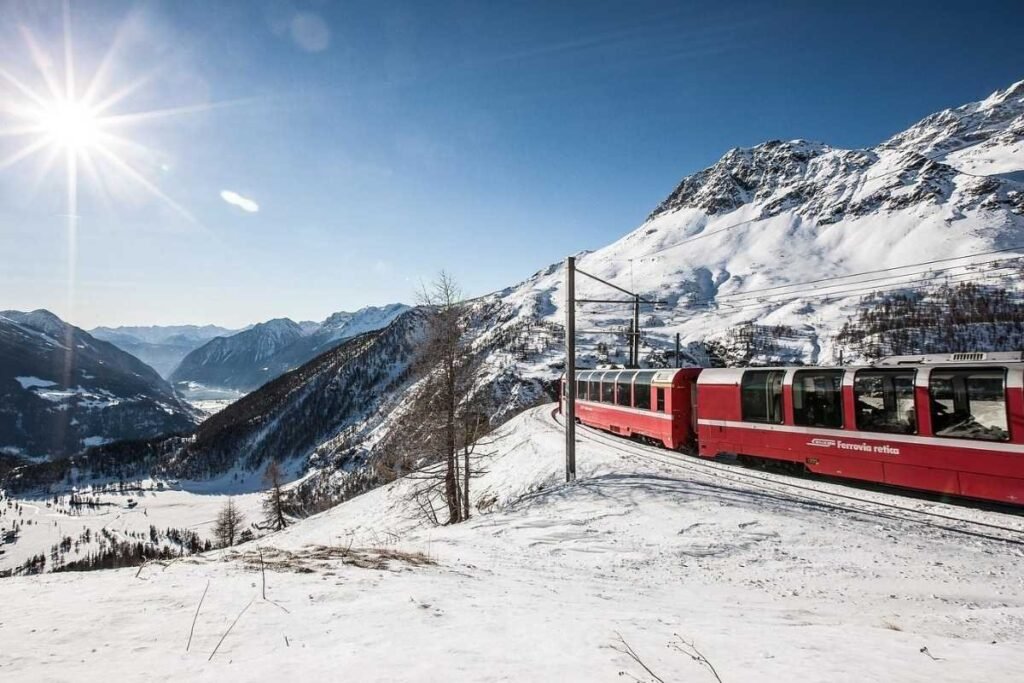
In winter, the service continues but with a reduced schedule. There are fewer daily departures, and some departure times shift slightly. The upside is that the landscape transforms entirely. Snow blankets the viaducts, including the famous Landwasser Viaduct, and the Morteratsch Glacier takes on a pale, ghostly appearance against grey skies. Winter travel on this route rewards passengers with a quieter, more atmospheric experience and far easier seat availability.
If you are planning a Bernina Red Train day trip from Milan, note that the Italian border crossing into Tirano operates smoothly year-round, and the town itself is accessible regardless of season. Just check current Swiss Federal Railways schedules close to your travel date, as exact times can vary by a few minutes across the winter and summer timetables.
Which Season Is Best for Riding the Bernina Express?
There is no single right answer here. It depends entirely on what kind of traveller you are and what you want to get out of the journey.
Summer offers the richest colour and the greatest visibility. The Bernina Pass is free of snow, the mountain lakes are a deep turquoise-blue, and you can spot hikers on the trails below as the train climbs through the Engadin valley. If you want the classic postcard experience, late June through mid-September delivers it consistently. Go early in the morning if possible. The light is softer and the mountains are usually free of cloud before midday.
Spring, particularly May, is an underrated time to travel. Crowds are thinner, prices for accommodation in St. Moritz are noticeably lower, and patches of snow still cling to the upper ridges while the lower valleys are turning green. It feels like catching the route in transition, which has its own quiet appeal.
Autumn brings golden larch forests across the Engadin, and October is genuinely one of the most photogenic months on this line. The train is less crowded than in summer, and the cooler air keeps visibility sharp.
For winter travel, a Bernina Train private tour from Milan or St. Moritz can be a smart option, giving you flexibility around the reduced winter timetable while keeping the experience comfortable and well-organised.
If your trip extends beyond the Bernina route, the broader Swiss rail network also rewards exploration. A Swiss Alps train tour from Zurich with the Glacier Express pairs beautifully with the Bernina Express for a multi-day alpine rail itinerary, and again, both trains operate throughout the year.
Whatever month you choose, the Bernina Express will run. The question is really about what kind of landscape you want to see rolling past those panoramic windows.