
What Makes the Glacier Express So Special
The Glacier Express runs between Zermatt and St. Moritz, covering roughly 290 kilometers through the Swiss Alps. The journey takes around eight hours, crossing 291 bridges and passing through 91 tunnels. Those numbers alone tell you something about the terrain the train cuts through.
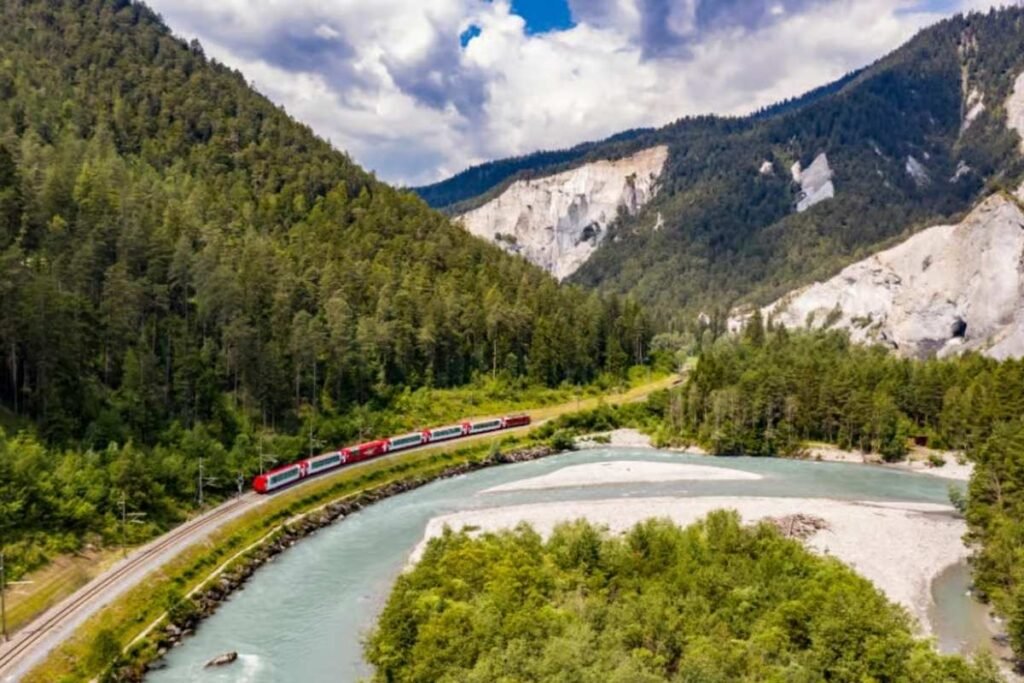
The panoramic carriages are the heart of the experience. Large, curved windows stretch up toward the ceiling, giving passengers an almost unobstructed view of alpine meadows, gorges, and snow-covered peaks. The Oberalp Pass, sitting at 2,033 meters above sea level, is the highest point on the route and one of the most photographed stretches of rail in Europe.
Unlike many scenic trains, the Glacier Express operates year-round. Winter brings frozen landscapes and snow-draped villages, while summer opens up green valleys and hiking trails visible straight from your seat. Spring and autumn tend to be quieter, with smaller crowds and softer light that photographers often prefer.
Reservations are mandatory on this train, even if you hold a Swiss Travel Pass or Eurail Pass. Seat reservations cost extra and should be booked well in advance, especially for travel between June and September. First class gets you slightly wider seats and a dedicated dining service, but second class panoramic seats offer the same views at a lower price point.
If you want a more guided introduction to the route, a Swiss Alps train tour from Zurich with the Glacier Express includes a rail pass, reserved seat, and a local guide through Andermatt, which takes a lot of the logistics off your plate.
Planning Your Journey: Practical Tips for 2026
The most important decision is which direction to travel. The classic westbound route goes from St. Moritz to Zermatt, with the sun generally behind you in the afternoon, which can help with photos. Eastbound from Zermatt to St. Moritz works just as well and gives you a different perspective on the same landscapes.
Sit on the right side of the train heading westbound for the best views of the Rhine Gorge, sometimes called the Swiss Grand Canyon. This stretch between Reichenau-Tamins and Ilanz is dramatic and easy to miss if you are not paying attention.
Lunch on board is a well-known experience. The dining car serves Swiss staples, and the tilted wine glass, a clever design that compensates for the steep gradients, has become something of a symbol for the journey. Booking a dining reservation at the same time as your seat is a smart move.
St. Moritz makes a natural starting or ending point for exploring broader alpine rail connections. The Bernina line departs from here, running south toward Italy through high-altitude viaducts and glacial scenery. Travelers coming from Milan can combine both routes on a Bernina Red Train day trip from Milan, or go deeper with a Bernina Train private tour from Milan or St. Moritz that includes a Lake Como stop and hotel pickup.
One practical note: the Glacier Express is a slow train by design. It is not a commuter service or a way to get somewhere quickly. Build extra days into your itinerary around the journey so the pace feels like a feature rather than a frustration.