
What Are the Main Glacier Express Stops?
The Glacier Express runs between Zermatt and St. Moritz, covering roughly 291 kilometres across some of the most dramatic Alpine scenery in Europe. The full journey takes about eight hours, crossing 291 bridges and passing through 91 tunnels. But the magic is really in the stops along the way, each one offering a different reason to step off the train.
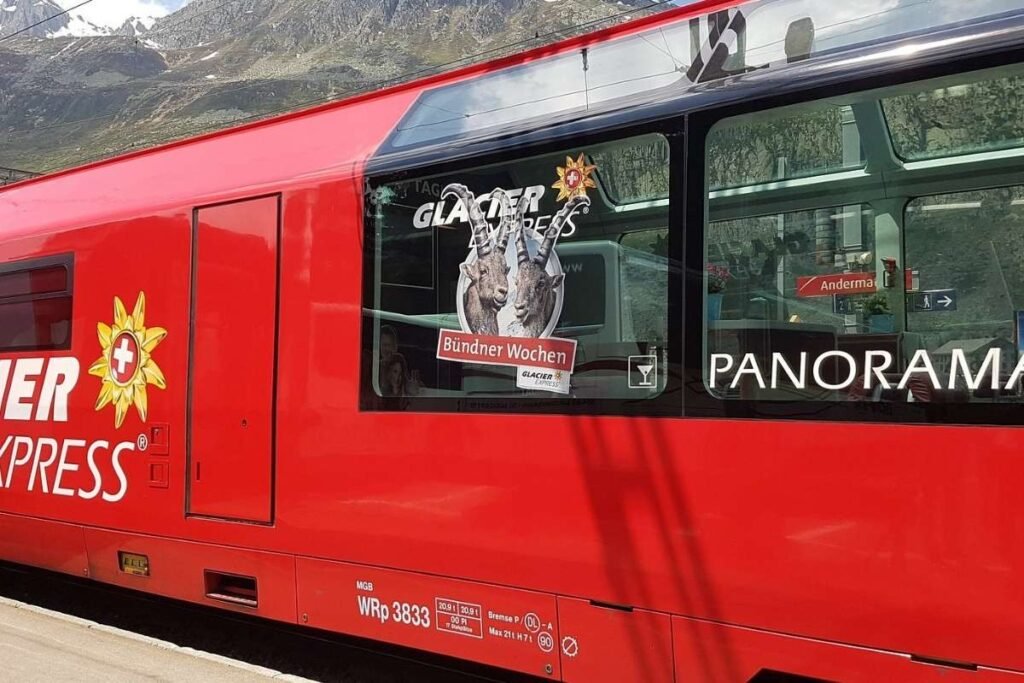
Zermatt is the western terminus, a car-free village sitting in the shadow of the Matterhorn. It is worth arriving the evening before your train departs so you have time to walk around without the day-trip crowds. From Zermatt, the route climbs east through Brig, a pleasant market town where the Simplon Pass road begins. Brig is also a major rail junction, so it is a practical boarding point if you are travelling up from Milan or Geneva.
Andermatt comes next, sitting high in the Uri Alps at around 1,440 metres. This is one of the most underrated stops on the route. The village has a quiet, lived-in feel that the more polished ski resorts lack, and it makes an excellent overnight base if you want to break the journey. From Andermatt, the train crosses the Oberalp Pass at 2,033 metres, the highest point on the entire route. Snow covers this section well into spring, and the views down into the valleys are genuinely spectacular.
Disentis and Chur follow as the train descends into the Rhine Valley. Chur is the oldest city in Switzerland and worth a half-day stop for its Old Town and Roman history. The final stretch east takes the train through Filisur, where the famous Landwasser Viaduct carries the line across a limestone gorge, before arriving in St. Moritz.
If you prefer to experience the Glacier Express with local guidance and a reserved seat already sorted, a Swiss Alps train tour from Zurich with the Glacier Express takes care of the logistics so you can focus on the views.
Tips for Choosing Where to Board and Alight
Most travellers ride the full Zermatt to St. Moritz route in one sitting, but that is not always the best strategy. The most photogenic section of the journey runs between Andermatt and Filisur, covering the Oberalp Pass and the Landwasser Viaduct. If your time is limited, prioritising this central stretch gives you the highest concentration of dramatic scenery per hour.
Seat selection matters on this train. Book a window seat on the south-facing side if you are travelling west to east, which means the right side of the carriage. This keeps the best valley views and glaciated peaks in your sightline for most of the journey. Reservations are mandatory on the Glacier Express regardless of which rail pass you hold, so sort this out well before your travel date, especially in July and August when the train fills up weeks in advance.
St. Moritz at the eastern end of the route connects naturally with the Bernina Express, another iconic Swiss rail line that drops south through the Alps toward Tirano in Italy. Combining the two journeys over two or three days gives you a genuinely complete picture of Alpine rail travel. Travellers based in Milan have good options for accessing this corridor directly, including a guided Swiss Alps train tour from Milan via the Bernina Red Train that includes free time in St. Moritz.
One practical note: the Glacier Express does not run at high speed. It is a slow, panoramic train by design. Bring a good book, download offline maps of each stop in advance, and resist the urge to photograph every tunnel. Save your attention for the open-air viaducts and high passes where the landscape earns its reputation.