
The Bernina Express Schedule: Daily Departures and Year-Round Service
The Bernina Express runs every day of the year, which makes it one of the more accessible scenic railways in Europe. Unlike some mountain routes that shut down entirely in winter, this legendary train keeps rolling between Chur or St. Moritz in Switzerland and Tirano in Italy regardless of the season. That said, the frequency of departures does shift depending on the time of year.
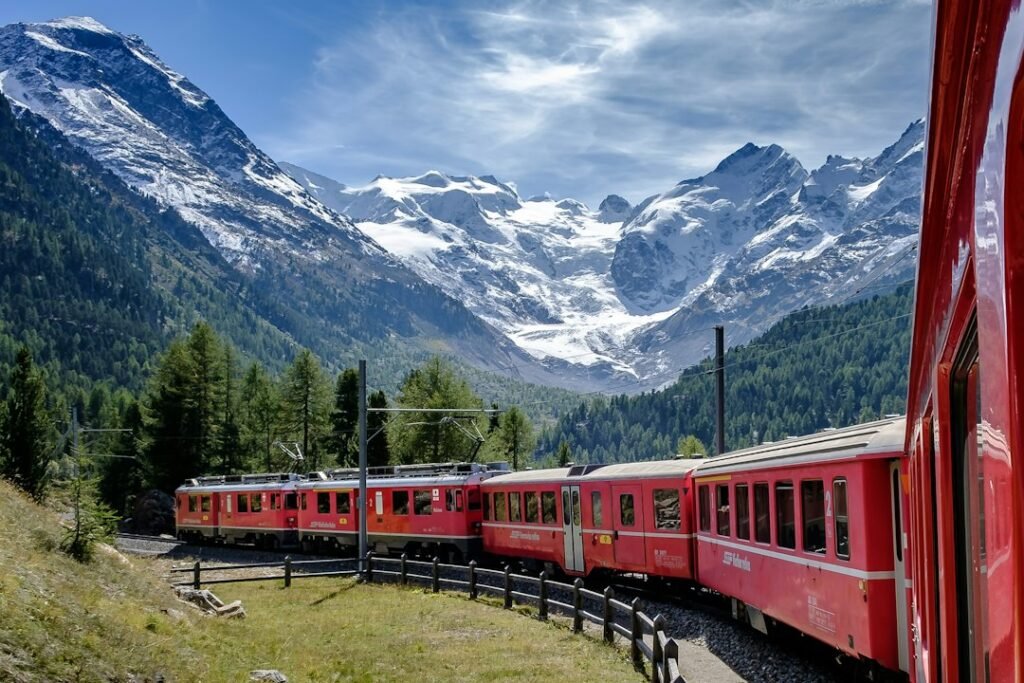
During the peak summer months, from late May through October, trains typically depart multiple times a day in each direction. From St. Moritz, you can expect departures in the morning and around midday, giving you a reasonable window to choose based on your itinerary. The full journey from Chur to Tirano takes roughly four hours from St. Moritz, so most travelers plan for a full day out.
In winter, departures thin out to one or two trains per day per direction. The route remains open, but you will want to book well in advance and double-check the current timetable on the Rhaetian Railway website, as schedules do shift slightly from year to year. For 2026, timetables are updated in December of the prior year, so check after mid-December 2025 for the most accurate information.
Panoramic car seats require a reservation on top of your rail ticket, and these sell out fast in summer. If you are planning to travel between June and September, book at least four to six weeks ahead. The Bernina Red Train day trip from Milan is a popular option that bundles the ticket and reservation, which simplifies the process considerably if you are based in northern Italy.
Best Time of Year to Ride the Bernina Express
The honest answer is that there is no bad time to take this train. The scenery changes dramatically with the seasons, and each period has its own appeal.
Summer, particularly July and August, offers lush green valleys, wildflower meadows at altitude, and long daylight hours. The route crosses the Bernina Pass at 2,253 meters, and on a clear summer day the views toward Piz Bernina and the Morteratsch Glacier are genuinely spectacular. This is also the busiest time, so expect full trains and the need to plan ahead.
September and early October are arguably the sweet spot. Crowds thin out, the larch forests turn gold and copper, and the light has that crisp alpine quality that photographers love. Temperatures are cooler but still comfortable, and you are far less likely to struggle finding a reservation.
Winter travel, from December through March, gives you a completely different experience. Snow covers the high passes, the viaducts stand out dramatically against white landscapes, and the journey feels almost surreal. If you want to see the route at its most cinematic, a clear winter day is hard to beat. A private Bernina train tour from Milan or St. Moritz is worth considering in winter if you want flexibility and a guide who knows the route well.
Spring, especially April and May, is the least predictable season. Snow can still close roads above the pass, though the rail line stays operational. Early flowers appear in the lower valleys while the peaks stay white, which creates a striking contrast. It is also the quietest time, making it ideal for travelers who prefer having the panoramic cars mostly to themselves.
If you are combining this with a broader Swiss rail adventure, it pairs naturally with other routes through the Alps. The Swiss Alps train tour from Zurich with the Glacier Express covers different terrain and makes for a well-rounded multi-day itinerary across the country.