
The Full Journey Time From Chur to Tirano
The Bernina Express runs between Chur, Switzerland, and Tirano, Italy, covering roughly 144 kilometers across some of the most dramatic mountain terrain in Europe. The full trip takes approximately four hours from Chur to St. Moritz, and then another two and a half hours from St. Moritz to Tirano. That puts the total journey at around four to four and a half hours if you board at St. Moritz, or closer to six hours if you start all the way from Chur.
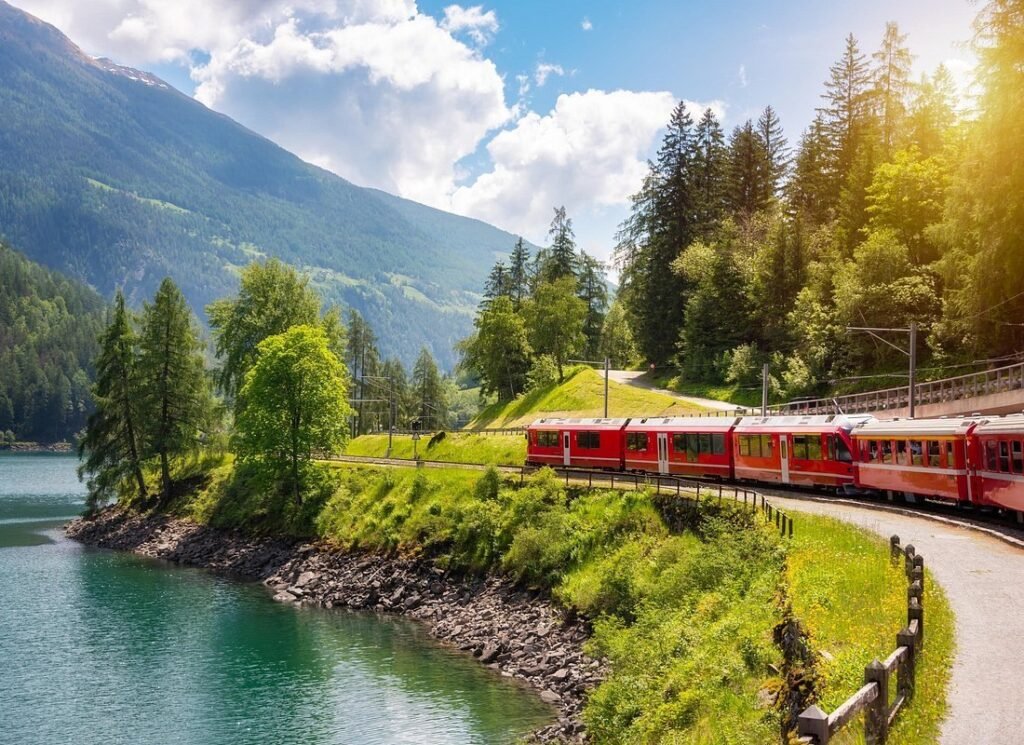
Most travelers in 2026 board at St. Moritz, which is the most popular departure point. From there, the train descends more than 1,800 meters in elevation as it crosses the Alps and drops into the Italian valley of Valtellina. It passes through 55 tunnels and over 196 bridges, including the iconic Landwasser Viaduct and the Brusio circular viaduct. The route is a UNESCO World Heritage Site, and the scenery makes every minute on board feel worthwhile.
If you are traveling from Milan, the journey gets a bit longer overall since you need to factor in the train or bus connection to Tirano before boarding. A popular option is the Bernina Red Train day trip from Milan, which organizes the full route as a loop so you can experience the entire crossing and return to Milan the same day. Total travel time for this kind of itinerary is typically around 10 to 11 hours door to door.
What Affects Your Total Time on Board
The actual time you spend on the train depends on where you board and where you get off. Here are the key segment times to keep in mind for 2026 schedules:
St. Moritz to Tirano: approximately 2 hours 30 minutes. This is the most scenic section and includes the highest point on the route, the Ospizio Bernina station at 2,253 meters above sea level.
Chur to St. Moritz: approximately 2 hours. This section winds through the Rhine Gorge and the Engadin valley, offering its own spectacular views even before the main Alpine crossing begins.
One practical consideration: the Bernina Express runs year-round, but schedules vary by season. In summer 2026, there are typically two to three daily departures from St. Moritz heading south. In winter, the frequency drops slightly, so checking the Rhaetian Railway timetable ahead of time is essential. Panoramic car seats also sell out weeks in advance during peak season, so booking early is strongly recommended.
For travelers who want more flexibility and a personalized pace, a Bernina Train private tour from Milan or St. Moritz gives you the option to stop at key viewpoints and spend more time at altitude without being locked into a fixed timetable.
Planning Tips to Get the Most From the Ride
Sit on the right side of the train when traveling from St. Moritz to Tirano for the best views of the Morteratsch Glacier and the Palü peaks. Bring layers regardless of the season, because the temperature at Ospizio Bernina can be surprisingly cold even on a warm July day.
If you have more time in Switzerland and want to combine the Bernina route with another legendary crossing, the Swiss Alps train tour from Zurich with the Glacier Express is a natural pairing. The two routes together give you a full picture of what Swiss mountain rail travel looks like at its very best.
Keep your passport handy. The Bernina Express crosses an international border, and while checks are rare, border officials do occasionally board the train between Campocologno and Tirano. Arriving in Tirano with a bit of extra time also lets you explore the town before catching your return connection.