
The Main Departure Points of the Bernina Express
The Bernina Express runs along one of the most spectacular railway lines in the world, crossing the Swiss Alps between Switzerland and Italy. The train operates on the Rhaetian Railway, a UNESCO World Heritage route, and has two primary departure points depending on which direction you travel.
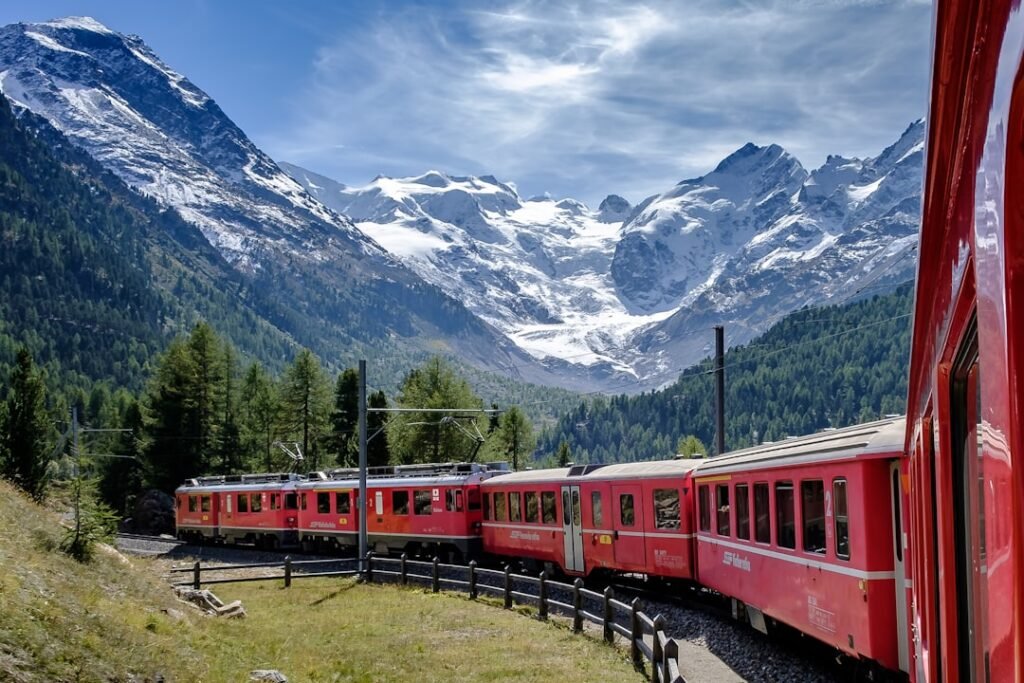
The most popular starting point is Chur, the oldest city in Switzerland and the main hub of the Rhaetian Railway network. From Chur, the full journey takes you through Davos or Thusis, up through the Albula Pass tunnels, and into St. Moritz before continuing over the Bernina Pass toward Tirano in Italy. The full Chur-to-Tirano ride takes around four hours.
The second major departure point is St. Moritz. Many travelers choose to start here because it cuts out the first leg from Chur and focuses entirely on the Bernina section, which is arguably the most dramatic stretch of the entire route. From St. Moritz, the train climbs to the Ospizio Bernina station at 2,253 meters above sea level, the highest point on the line, then descends through palm tree-lined valleys into Tirano, Italy. This portion alone takes about two hours and twenty minutes.
Tirano, on the Italian side, also serves as a starting point if you are traveling northbound. From Tirano, connections to Milan by regional train are straightforward, making it easy to link the Bernina Express into a broader Italy-Switzerland itinerary. If you are coming from Milan, a Bernina Red Train day trip from Milan is one of the most efficient ways to experience the full crossing without needing to arrange overnight stays.
Practical Tips for Choosing Your Departure Station
Choosing between Chur and St. Moritz comes down to your schedule and what you want to see. If you have a full day and want the complete Bernina Express experience, board at Chur. The Albula line leading into St. Moritz is itself a UNESCO-listed route with impressive viaducts and spiral tunnels, so skipping it means missing a genuinely remarkable first act.
If your time is limited or you are already based in the Engadin valley, departing from St. Moritz is the smarter call. The Bernina Pass section between St. Moritz and Tirano packs glaciers, alpine lakes, and stone-arch bridges into a relatively short window. The famous Landwasser Viaduct, however, is on the Albula line before St. Moritz, so keep that in mind when planning.
Seat reservations are mandatory on the Bernina Express panoramic cars and cost a small fee on top of your rail pass or ticket. Book in advance during summer and around major holidays, as the train fills up fast. Panoramic cars have large windows that stretch to the ceiling, making them worth the upgrade for photographers and first-time visitors. Sit on the left side when traveling southbound from St. Moritz toward Tirano for the best views of the glaciers.
For those who want a more curated experience, a Bernina Train private tour from Milan or St. Moritz takes the logistics off your plate entirely. Alternatively, if you are already exploring Switzerland by rail and want to combine multiple scenic routes, pairing the Bernina Express with a Swiss Alps train tour from Zurich with the Glacier Express gives you two legendary journeys in one trip.
One last practical note: the Bernina Express runs year-round, but the winter schedule has fewer daily departures than summer. Check the Rhaetian Railway timetable directly before booking, as departure times shift seasonally and some connections require a bus segment between Lugano and Tirano rather than the full train route.