
What the Bernina Red Train Route Actually Covers
The Bernina Red Train — officially operated by the Rhaetian Railway — runs between Chur or St. Moritz in Switzerland and Tirano in northern Italy. The most celebrated stretch is the one crossing the Bernina Pass, sitting at 2,253 metres above sea level, making it the highest railway crossing in the Alps that operates year-round without a tunnel. The train earns its nickname from the bright red Allegra railcars that have become a symbol of the route.
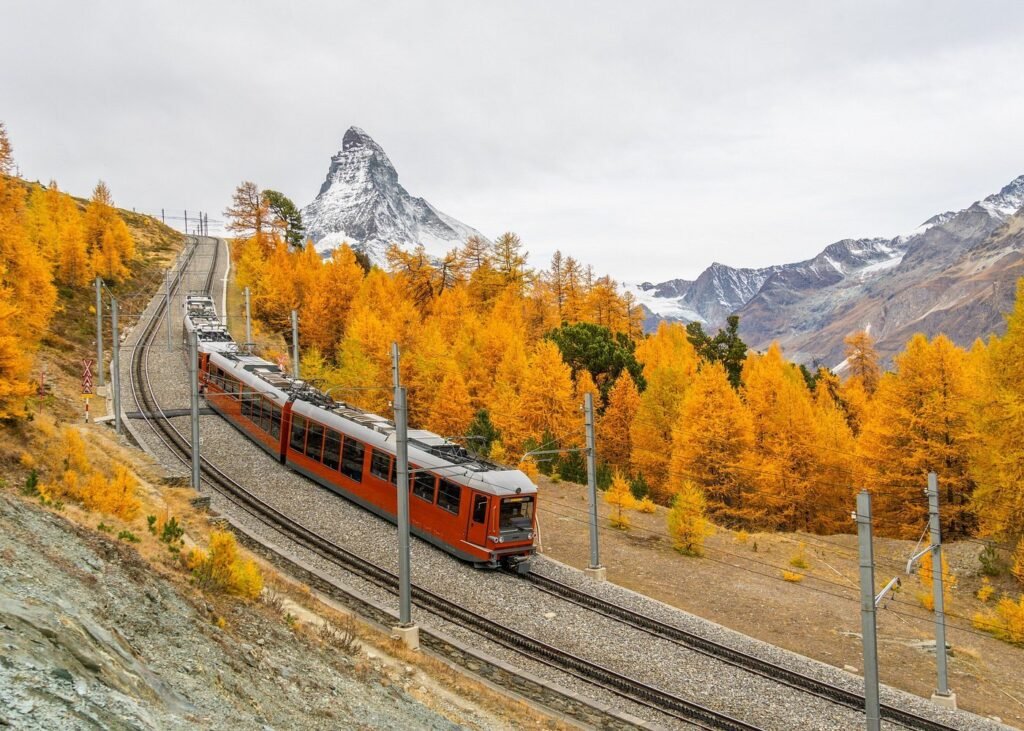
The full St. Moritz to Tirano leg takes roughly two and a half hours and covers about 61 kilometres. Do not let that short distance fool you. The train gains and loses more than 1,800 metres of altitude along the way, crossing 55 tunnels and 196 bridges. The Landwasser Viaduct — a six-arched curved bridge that curves directly into a tunnel — is one of the most photographed railway structures in the world and a UNESCO World Heritage Site highlight along with the broader Rhaetian Railway network.
Key stops worth knowing: Pontresina is a good base for hikers. Alp Grüm sits above the tree line and has a small restaurant with views down to the Palü Glacier. Poschiavo is a quiet Italian-speaking Swiss town worth an hour of your time if you are travelling on a flexible itinerary. Tirano, the Italian terminus, has a lively market square and easy onward connections by bus or train toward Lake Como.
If you are planning a day trip from Milan, the Bernina Red Train day trip from Milan is one of the most efficient ways to experience the full route without needing to overnight in Switzerland.
Practical Tips for Riding the Route in 2026
Seat reservations are mandatory on the Bernina Express panoramic service and strongly recommended on any departure during summer and the winter ski season. Book at least two to three weeks ahead if you are travelling between June and September or around Christmas. The Rhaetian Railway website allows reservations in multiple currencies, and seat supplements are modest compared to similar scenic trains in Europe.
Choose your seat side carefully. Travelling from St. Moritz toward Tirano, the right-hand side of the train gives you the best views of the Morteratsch Glacier and the long descent into the Valposchiavo valley. On the return leg, the left-hand side compensates with open Alpine meadow panoramas. Panoramic cars have large windows that tilt slightly, but standard cars work perfectly well — the views are not significantly worse, and the tickets cost less.
The route is open every day of the year, though heavy snowfall occasionally causes short delays in January and February. Dress in layers regardless of the season. Even in July, the Bernina Pass area can be surprisingly cold, and the temperature change between Tirano at 429 metres and the pass summit is dramatic.
Travellers who want a more personal experience of the Alps beyond just this line might consider the Bernina Train private tour from Milan or St. Moritz, which allows for flexible stops and a guided perspective on the landscape. For those interested in pairing the Bernina route with another iconic Swiss rail journey, the Swiss Alps train tour from Zurich with the Glacier Express offers a natural multi-day extension through the heart of the Alps.
One last practical note: Tirano sits just across the Italian border, which means your Swiss rail pass does not cover the Italian side of the journey automatically. Check coverage before you travel to avoid an unexpected ticket purchase on board.