
What Makes the Bernina Express So Remarkable
The Bernina Express is not just a train ride. It is a 4-hour crossing of one of the highest railway passes in Europe, threading through 55 tunnels and over 196 bridges as it connects Chur or St. Moritz in Switzerland to Tirano in northern Italy. The line holds UNESCO World Heritage status, a distinction it shares with very few railways on the planet, and that recognition tells you something important: this is a piece of engineering history still operating in daily service.
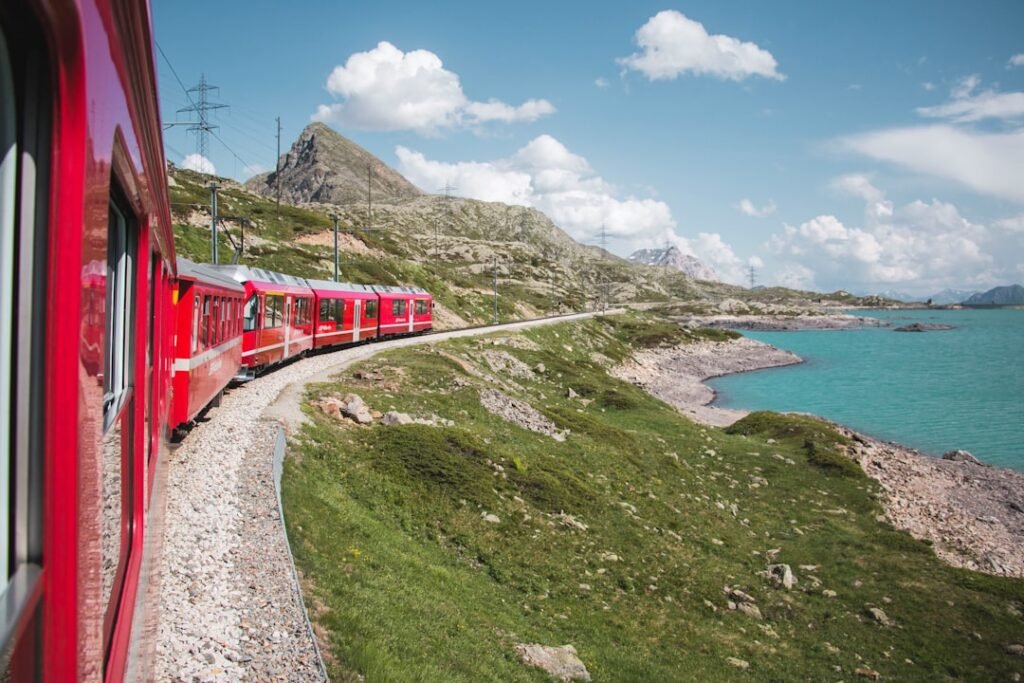
The train climbs to 2,253 meters above sea level at the Ospizio Bernina station, which sits on the watershed between the Atlantic and the Black Sea. On a clear day, passengers look out at glaciers, high alpine meadows, and frozen lakes depending on the season. In winter, the landscape turns stark and white. In summer, the Morteratsch Glacier catches the light in ways that are genuinely hard to describe without sounding excessive.
The iconic red carriages run year-round, which is part of what makes planning a trip straightforward. Unlike some scenic railways that operate seasonally, the Bernina line keeps a reliable schedule across all four seasons. If you are traveling from Italy, the Bernina Red Train day trip from Milan is one of the most popular approaches, putting the full alpine crossing within reach as a single long day out of the city.
Practical Tips for Getting the Most Out of the Journey
Seat selection matters more on this train than almost any other in Europe. The panoramic carriages, available on the Bernina Express service, have large windows that extend toward the ceiling, giving you unobstructed views without craning your neck. Book these specifically rather than standard second-class seats, and reserve well in advance during July and August, when demand is highest.
The direction of travel changes what you see first. Traveling from St. Moritz toward Tirano puts the Landwasser Viaduct in the early section and the Brusio spiral viaduct near the end, just before the Italian border. Many experienced travelers ride the route in both directions on the same trip for this reason. If you prefer a more curated experience with a guide who can explain what you are looking at as the scenery unfolds, a Bernina Train private tour from Milan or St. Moritz gives you that context without having to research every viaduct and glacier yourself.
Pack layers regardless of the season. Even in August, the temperature at the Ospizio Bernina stop can be noticeably cooler than at valley level. The train does stop briefly at key points, giving passengers a few minutes on the platform. Having a jacket accessible rather than buried in overhead luggage makes those moments more comfortable.
Tirano on the Italian side is worth at least an hour or two before heading back. The town is compact, the food is solidly Lombardian, and the basilica near the train station is genuinely worth a look. Treat it as part of the journey rather than just a turnaround point.
For those who want to extend their time in the Swiss Alps and compare this line against other legendary routes, the Swiss Alps train tour from Zurich with the Glacier Express pairs naturally with a Bernina crossing as part of a longer rail itinerary through the region.